
Planetary Negotiation | 行星协商
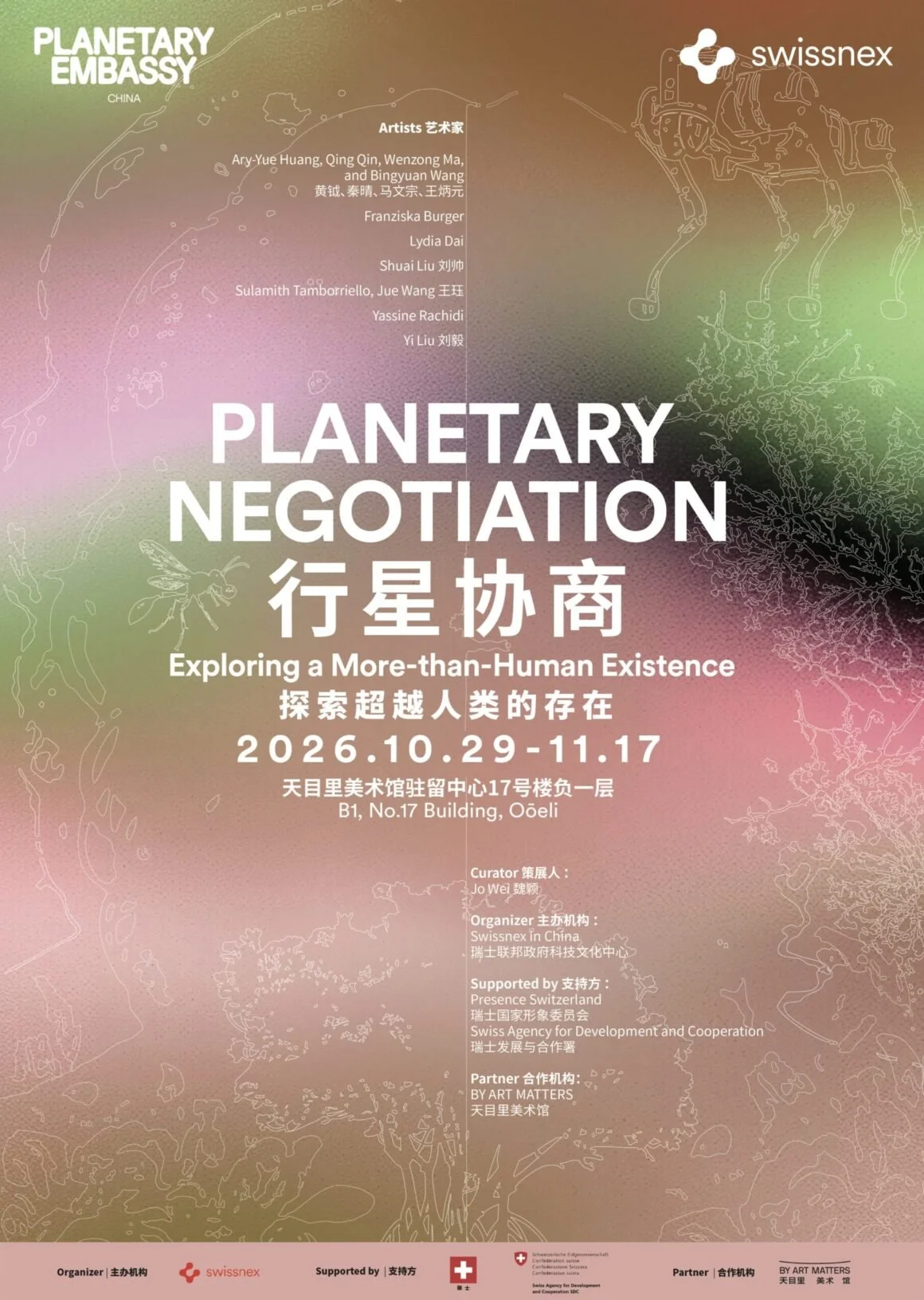
Date: 2026.10.29-11.17
Location: BY ART MATTERS, Hangzhou, China
Organizer: Swissnex in China
Curator: Jo WEI
Artists:Franziska Burger, Lydia Dai, Ary Yue HuangAry-Yue Huang, Qin Qing, Wenzong Ma, Bingyuan Wan, Shuai Liu, Yi Liu, Yassine Rachidi, Sulamith Tamborriello & Jue Wang
机构:天目里美术馆驻留中心,杭州,中国
主办方:瑞士联邦政府科技文化中心
策展人:魏颖
艺术家:Franziska Burger, Lydia Dai, 黄钺, 秦晴, 马文宗, 王炳元, 刘帅, 刘毅, Yassine Rachidi, Sulamith Tamborriello & 王珏
Curatorial Text | 展览文字
Traditional diplomacy takes the nation-state as its basic unit and places human interests at the center of negotiation. Today, a different form of diplomacy is beginning to emerge; one that operates on a more-than-human scale. We call this planetary negotiation.
In the 1990s, scholar Gayatri Chakravorty Spivak distinguished between "the Global" and "the Planetary". She argued that “the Global” relies on the frameworks of markets, and the nation-state to transform the Earth into a quantifiable, homogenized space, organized around human interests; whereas “the Planetary” acknowledges that the Earth exists independently of humanity; humans are not its masters, but rather inhabitants living together with other species.
Bruno Latour further expands the meaning of “negotiation” through Actor-Network Theory. Planetary negotiation is not merely bargaining among humans; it is a Parliament of Things, where non-human actors may also speak and take part in negotiation.
Developed from Planetary Embassy China, the flagship 2026 program of Swissnex in China, the exhibition Planetary Negotiation: Exploring a More-than-Human Existence seeks to move beyond human cognitive frameworks and imagine new modes of symbiotic ecosystems. The exhibition space is constructed as an open,multispecies field of negotiation, unfolding across three spatial chapters — “Proposition” “Negotiation” and “Reciprocation” — and inviting diverse non-human agents to join humans in renegotiating the boundaries of ecological niches. As representatives of humanity, visitors will enter this space, encountering and rethinking the diverse forms of life featured in the artworks. The artworks are arranged in chronological order according to the evolutionary timeline of life on Earth: slime moulds, mycorrhizae, mangroves, mud wasps, and robotic dogs. A unique “Earth biography” has been written for each entity, documenting its origin, distribution, and behavioral patterns. Throughout the exhibition, the venue will also host open workshops, continuously inviting the public to participate in this event .
Chapter 1: Proposition
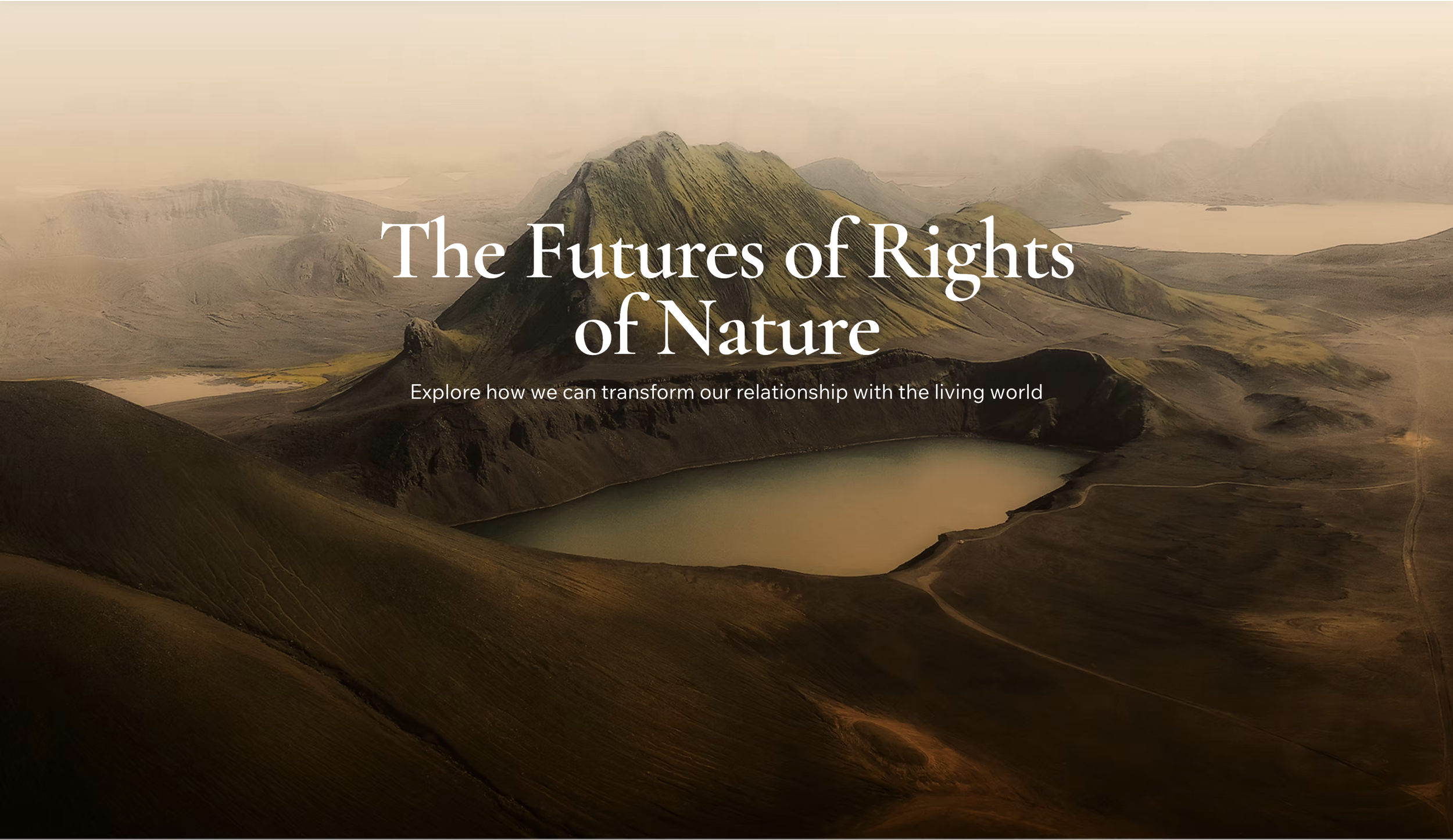
Opening with Lydia Dai’s Imaginations of Future Rights of Nature, the exhibition sets its keynote by posing a provocative question: If mountains, rivers, forests, wetlands, and all things in the world were no longer merely resources subordinate to humanity, but rather entities possessing the independent rights to exist, express themselves, and sustain themselves, how might humanity rethink its ecological responsibilities and the boundaries of existence? This speculative vision of a future institutional framework sets the core theoretical tone for this exhibition.
Chapter 2: Negotiation
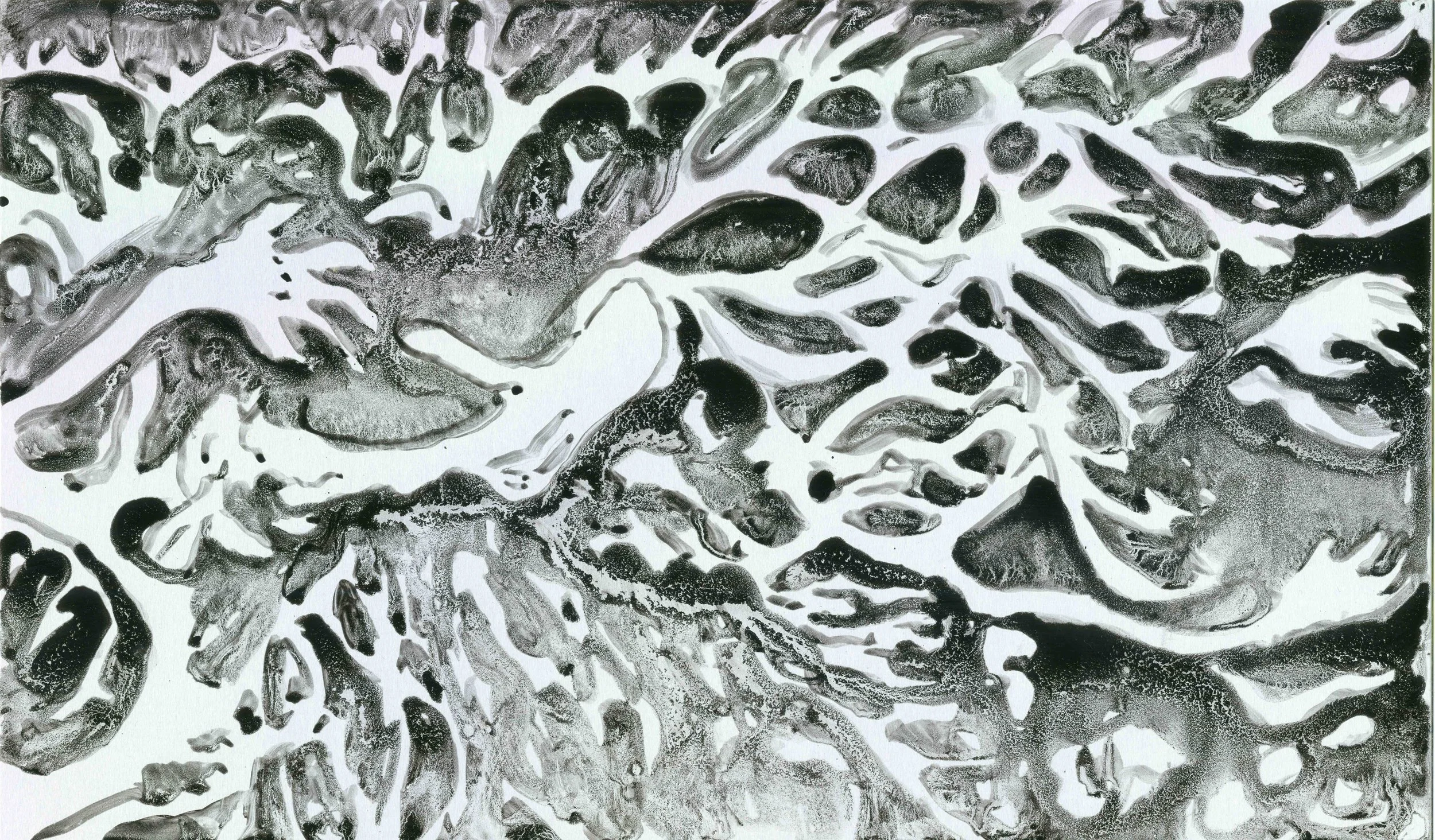
With this question in mind, we move into the second part of the exhibition, where we confront the complex entanglements between humans and diverse forms of life. Systems of Care in Slime Moulds, created by Sulamith Tamborriello and Jue Wang, centers on the life of slime moulds. Through long-term symbiotic experiments, it builds relations of care between humans and microorganisms, trying to reposition microscopic life on an equal footing with humankind. Yi Liu’s Entanglement: Collaborations in Uncertainty draws on anthropologists such as Anna Tsing and their research on mycorrhizae. Mycorrhizae are the partnership between roots and fungus, which exchange nutrients and sustain mutual aid in decentralized patterns; underground mycelium functions as an interspecies communication network, transmitting signals between plants. Yassine Rachidi’s Tidal Movements takes the reciprocal symbiosis between mangroves and tides as its theme, presenting—through three chapters of poetry and video across prehistory, the emergence of humanity, and the future.
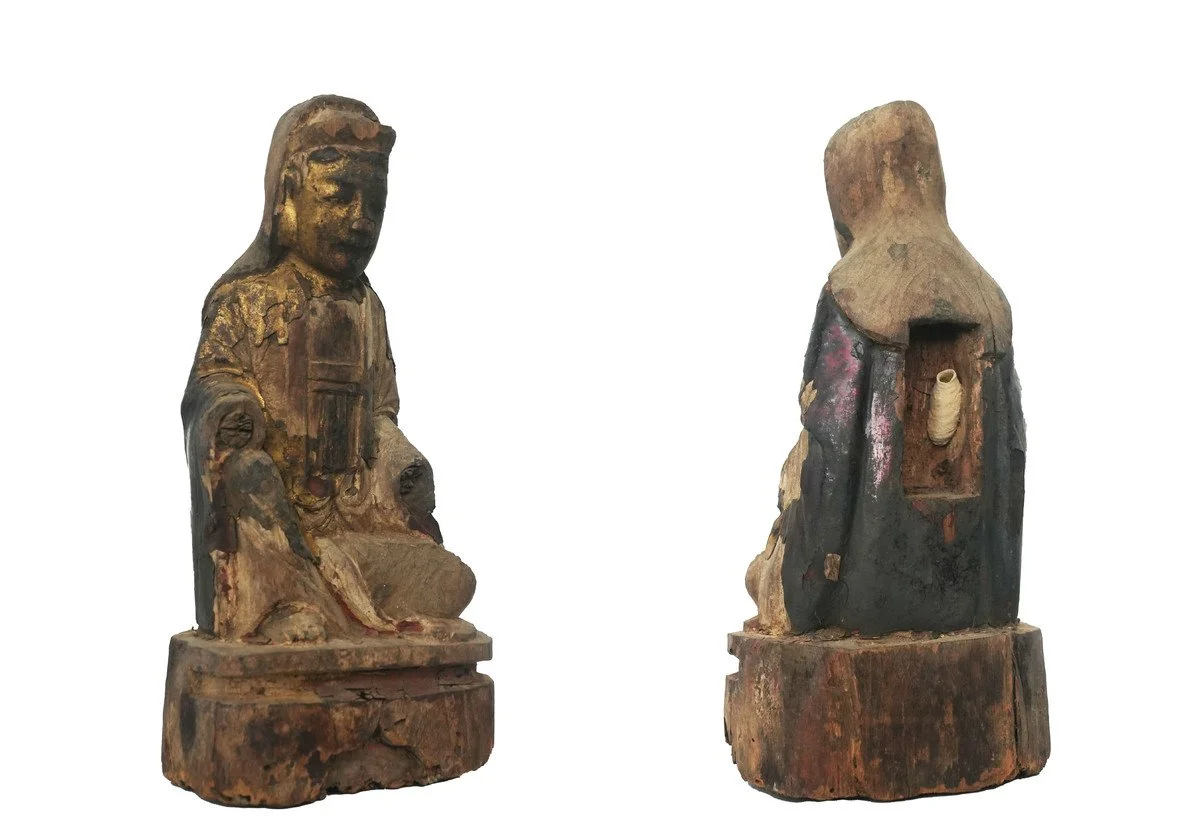
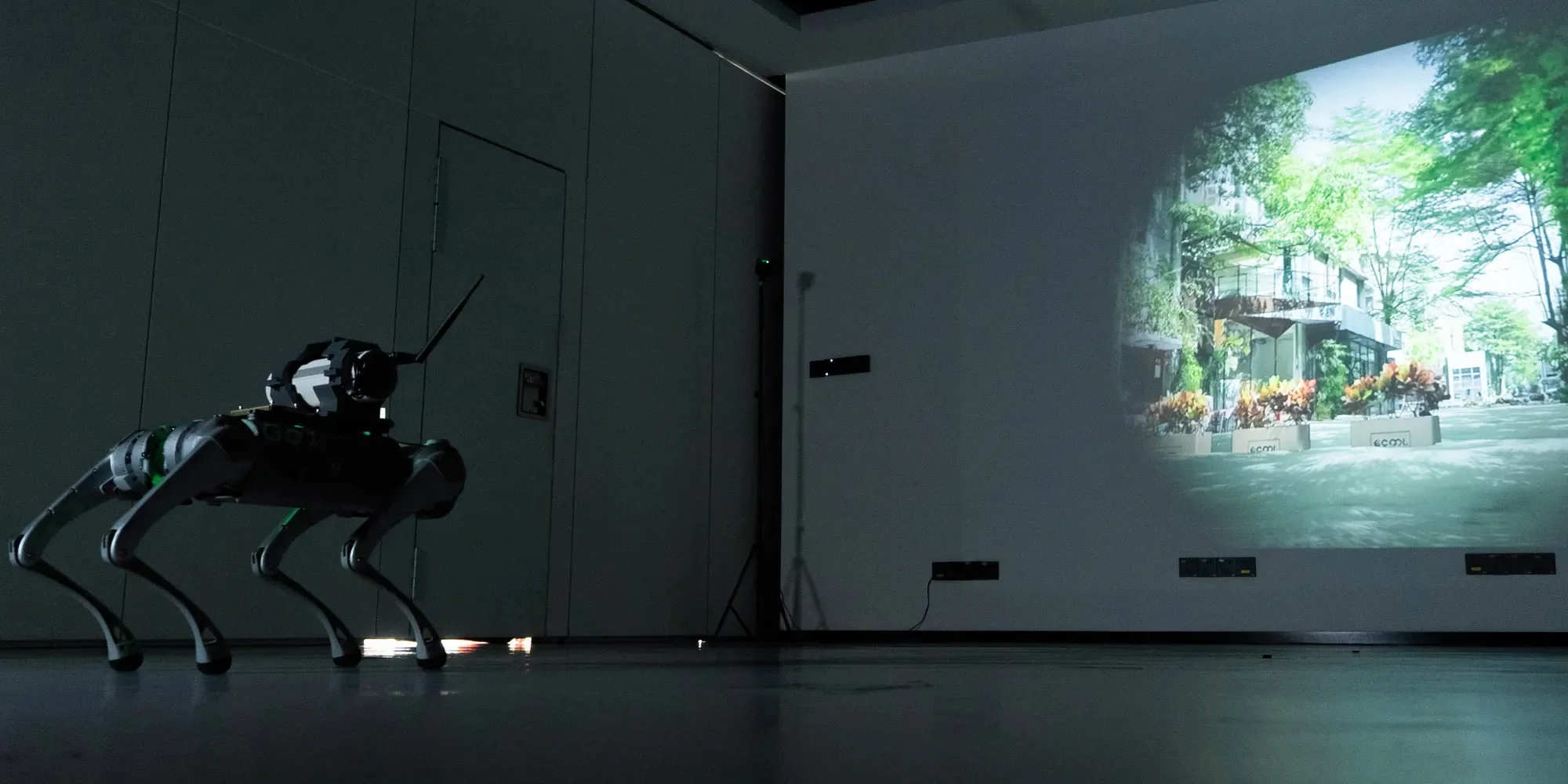
As a distinct narrative rooted in the Chinese context of this exhibition, Shuai Liu’s The Nest Within Guanyin depicts mud dauber wasps nesting within cavities of traditional wood carvings. Spaces once used by humans to store scriptures and sacred relics inadvertently become breeding grounds for another species, forming cross-species cohabitation woven from faith, wood and insect life. Yue Huang’ s Drift of the Uncharted introduces technical existences distinct from carbon-based life. The robotic dog in the work is a new participant endowed with independent perception and embodied presence: it acts both as a technical rescue agent of the future and a present-day witness to ecological crisis. Through a sensory perspective distinct from that of humans, it captures hidden ecological issues such as rising sea levels and climate anomalies .
Chapter 3: Reciprocation
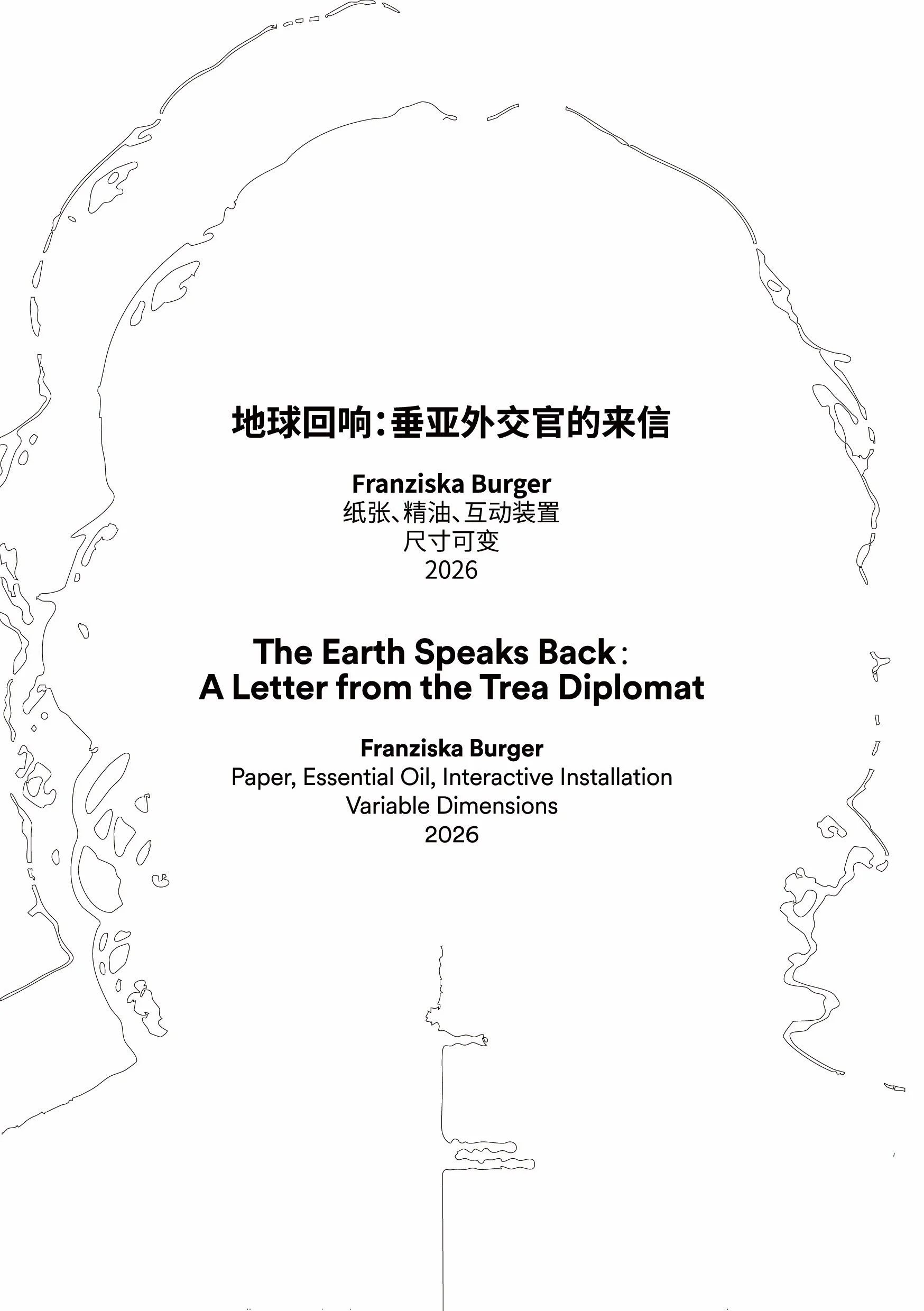
The closing chapter, The Earth Speaks Back: A Letter from the Trea Diplomat by Franziska Burger, completes two-way communication for this exhibition. The work sends a letter to humanity from the perspective of a tree diplomat, inviting viewers—after entering a temporary symbiotic space with trees, root systems, and microscopic life— to open up communication between humans and trees through multi‑sensory means.
The exhibition does not prescribe a standard answer but invites every viewer to collectively imagine a future where all beings are equal, where we engage in mutual negotiation, and where we care for one another. When audiences leave the gallery, this cross-species dialogue does not end; it extends into every moment of our daily lives where we encounter the more-than-human existence, transforming into countless small, recurring, and reciprocal acts of symbiosis.
Official Link from Swissnex: https://swissnex.org/china/event/planetary-negotiation-exploring-a-more-than-human-existence/
传统外交以民族国家为基本单元,围绕人类利益开展协商。而今,另一种协商方式正在生成,它以超越人类的尺度运作。我们称其为行星协商。
学者加亚特里·查克拉沃蒂·斯皮瓦克(Gayatri Chakravorty Spivak)曾于上世纪九十年代提出 “全球性”(the Global)与“行星性”(the Planetary)的区分,她认为全球性依托市场与民族国家框架,将地球改造为可量化、同质化的空间,以人类的利益为中心运作;而行星性则将地球视为独立于人类的存在,认为人类并非是地球的主宰,而是与万千物种共生的栖居者。
与此同时,布鲁诺·拉图尔(Bruno Latour)的行动者网络理论则拓展了“协商”的含义:真正的行星协商并非仅限人类的谈判,而是一场物的议会(the Parliament of Things),除人类以外的非人行动者亦可畅所欲言,参与讨论。
基于瑞士联邦政府科技文化中心2026年的旗舰项目“生生共议”(Planetary Embassy China),本次展览“行星协商——探索超越人类的存在”致力于思考如何超越人类固有的认知框架,构想出一种新型的共生生态系统。整个展场被建构为一座开放的多物种协商场域,并从“提议”,“协商”,“应答”三个章节空间展开,邀请多元的非人行动者,与人类共同重议生态位边界。作为人类代表的观众将步入其中,与作品中的多元生命彼此相遇。展览作品依照生命在地球的演化时序依次铺展:粘菌、菌根、红树林、泥蜂,机器狗。它们拥有专属的“地球传记”,记录其起源谱系、生存分布、生命习性。展览期间,展场亦将以工作坊的开放形式,持续邀请公众参与各类活动。
第一章 提议 Proposition
展览以Lydia Dai的作品《自然权利之未来想象》作为思考原点,抛出一个极具冲击力的问题:倘若山川河流、森林湿地、世间万物不再是人类的附属资源,而是拥有独立生存、自我表达与存续权利的主体,人类应当如何让渡生态特权、重置生存边界?这份面向未来制度的思辨想象,为整个展览奠定核心理论基调。
第二章 协商 Negotiation
带着这个问题,我们进入展览的第二部分,直面人类与多元生命的复杂纠缠,展开具体的多物种协商实践。Sulamith Tamborriello和王珏合作的《黏菌结构中的照护系统》聚焦黏菌的生命状态,以长期共生实验搭建人与菌群的照护关系,尝试重新将微观生命置于与人类平等的视角。刘毅的《纠缠:不确定性协作》结合了罗安清等生态人类学者对于隐秘的地下共生体系的研究:菌根以去中心化的模式完成养分交换与互助,地下菌丝就像跨物种的通信网络,在不同植株间传递信号。Yassine Rachidi的《潮汐律动》则以红树林与潮汐的往复共生为主题,以三章诗篇和影像呈现了红树林在远古、人类出现、未来的三段时空故事之间的持续关联。
作为本次展览中国语境的独特叙事,刘帅《观音巢》中的泥蜂飞入了传统木雕的空腔,人类储存经文和圣物的空间不经意间成为了另一个物种的繁衍之处,于信仰、木与昆虫生命之间,形成了一段跨物种的共栖。而黄钺的《未知的漂行》则引入了硅基生命体。作品中的机器狗是具备独立感知、自主在场的新型参与者,它既是未来的技术救援主体,也是当下生态危机的警示者,以异于人类的传感视角捕捉到海平面上升、气候异变等隐性生态问题。
第三章 应答 Reciprocation
终章以Franziska Burger《地球回响:垂亚外交官的来信》的对话式叙事,为整个展览完成了一次双向沟通。作品以树木外交官的视角向人类发出一封信件,邀请观众在走入与树木、根系、微观生命的临时共生场域之后,以多重感知方式来开启深层交流。
展览并不预设标准答案,而是邀约每一位观者,共同想象一个万物平等、彼此协商、相互照护的行星未来。当观众离开展厅,跨物种对话并不会就此终止,它将延伸至日常生活里我们与万物相遇的每一刻,化为无数微小、往复、互惠的共生行动。
Artworks | 作品
Photos of Scene | 现场
Artworks(Captions) | 作品介绍
Imaginations of Future Rights of Nature|自然权利之未来想象
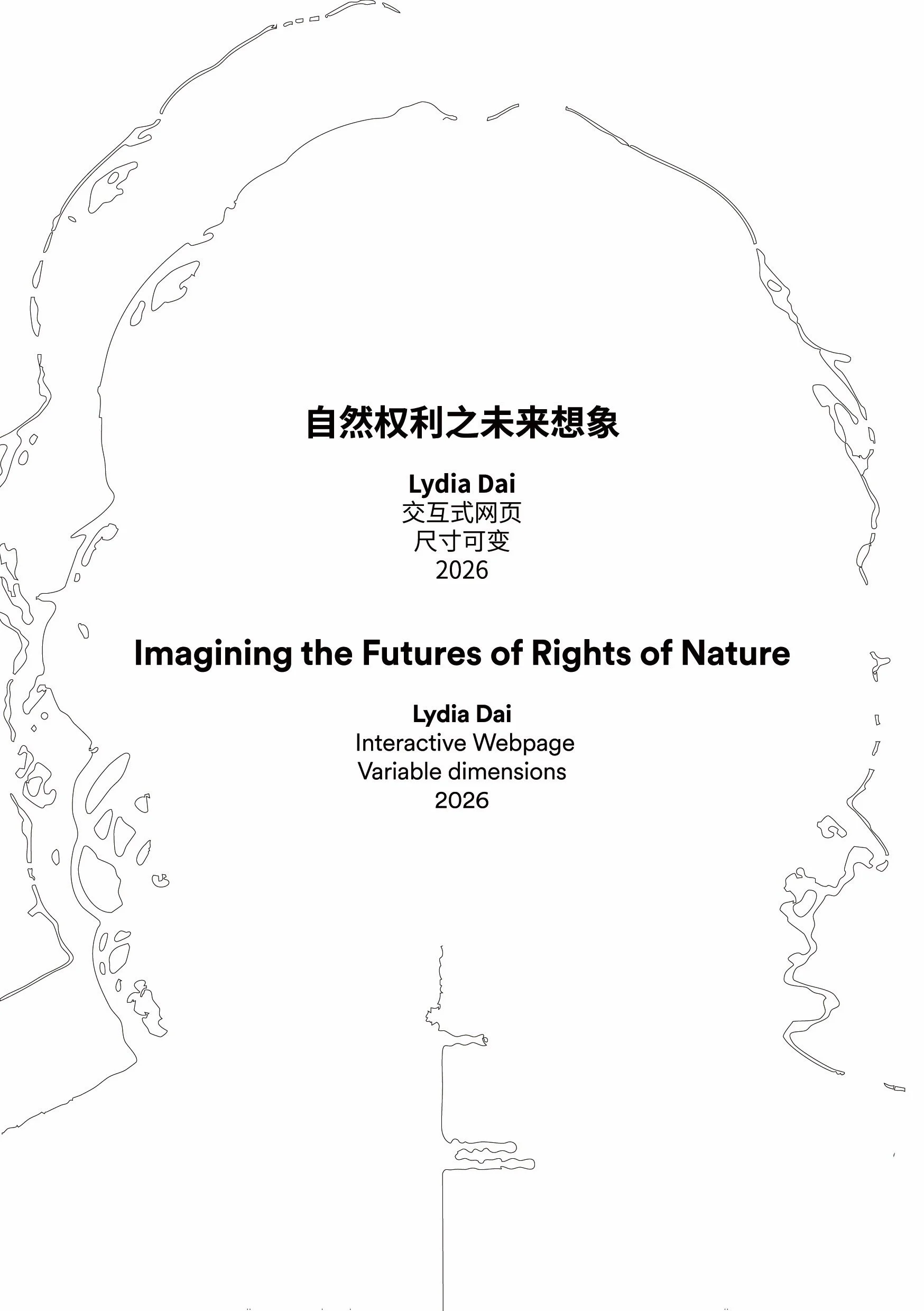
This project sets out to investigate how the concept of Rights of Nature could fundamentally reshape existing international legal frameworks and global diplomatic systems. Dominated by anthropocentric logic, today’s governance systems regard nature as property for human exploitation, failing to recognize its intrinsic value and independent agency. Through speculative visioning, the work unfolds a hypothetical future in which Rights of Nature are embedded deep within the architecture of global governance.
该项目探讨了“自然权利”这一概念如何从底层重塑现行的国际法律框架与全球外交体系。当下的治理体系受人类中心主义的逻辑主导,将自然视作可供人类开采利用的财产,拒绝承认其自身的内在价值与独立能动性。作品通过思辨式视角,铺展了一幅将自然权利嵌入全球治理架构的未来图景。
Lydia Dai currently lives and works in Switzerland. She is a multilateral environmental‑policy specialist whose work sits at the intersection of climate adaptation, nature governance and climate finance.
Lydia Dai,现工作和生活于瑞士。她是一位多边环境政策专家,研究聚焦气候适应、自然治理与气候金融的交叉领域。
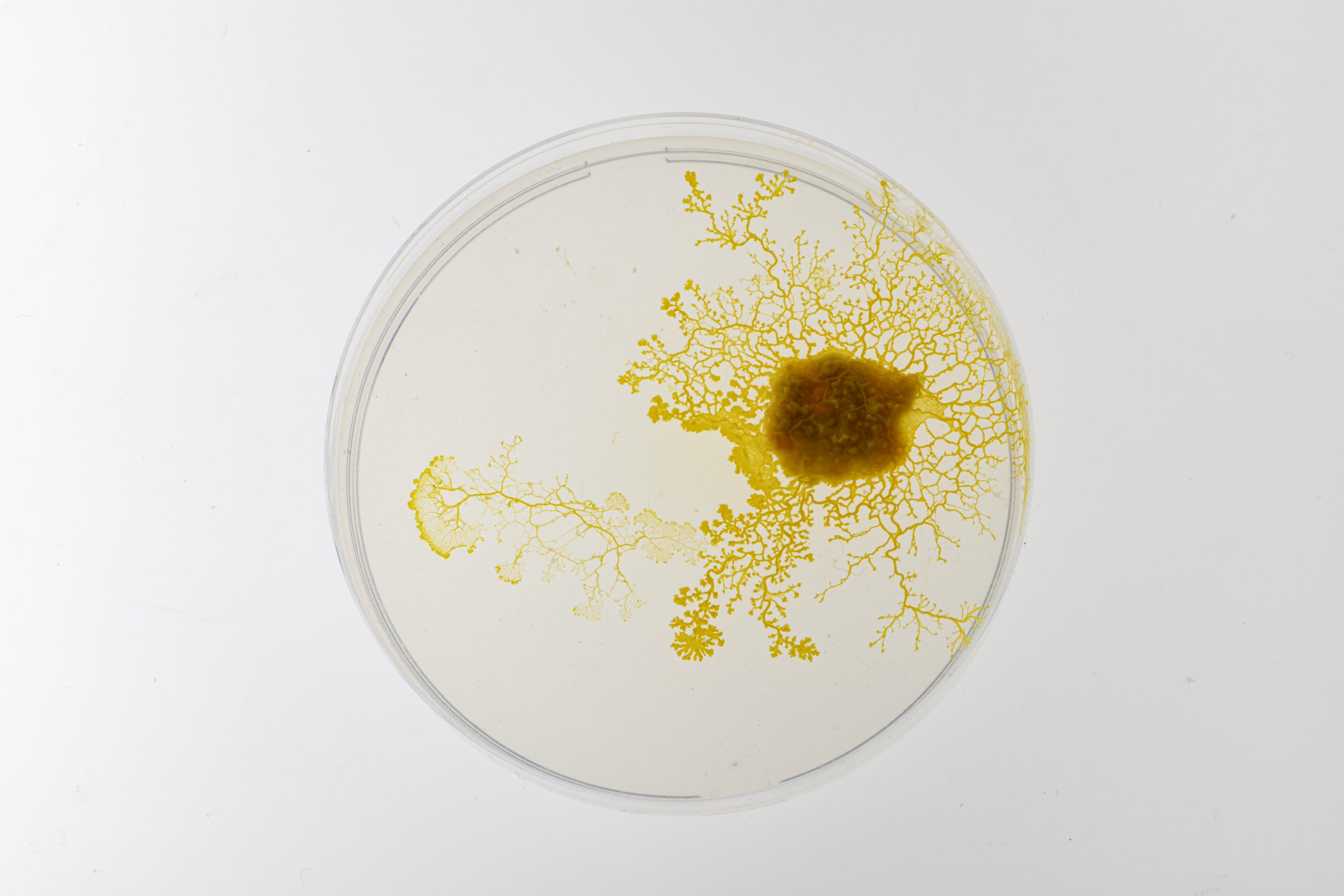
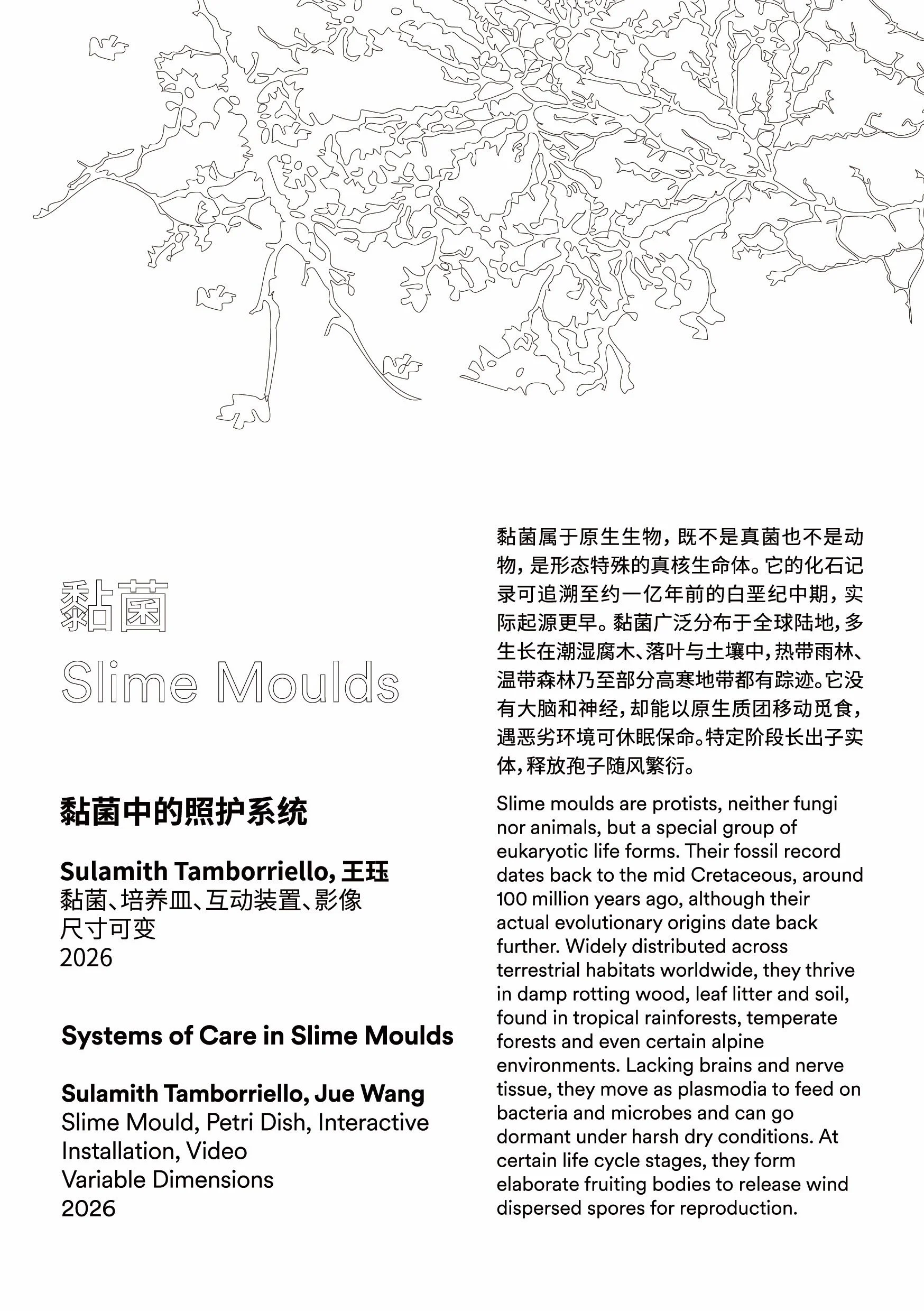
Systems of Care in Slime Moulds|黏菌中的照护系统
This is a long‑term trans‑species experimental work exploring the complex interrelations between human beings and non‑human organisms, between individual acts of care and collective responsibility, and between self and other. The artist establishes a sustained co‑habitation with a slime mould colony, developing a bond built upon interdependency, symbiosis and constant mutual transformation.
这是一项长期跨物种的实验性作品,探究了人与非人的生物体、个体照护行为与集体责任、自我与他者之间复杂的关系。艺术家与黏菌建立了持续的共栖关系,发展出一段建立在相互依存、共生、不断相互转化中的联结。
Sulamith Tamborriello currently lives and works in Zurich. She is an interdisciplinary artist whose practice engages with ecological crisis, climate justice and political participation. Through trans‑disciplinary research, demonstrations and participatory exhibitions, she creates artworks that act as catalysts for dialogue between human and non‑human life.
Sulamith Tamborriello,现工作和生活于苏黎世。她是一位跨媒介艺术家,创作围绕生态危机、气候正义与公共参与展开。依托跨学科研究、行动实践与参与式展览,她的作品创作推动了人与非人生命之间的对话。
Jue Wang currently lives and works in Guangzhou. She is a cross‑media artist and researcher pursuing her PhD in Computational Media and Arts at HKUST(GZ).
王珏,现工作和生活于广州。跨媒体艺术家、研究者,于香港科技大学(广州)攻读计算媒体与艺术博士。
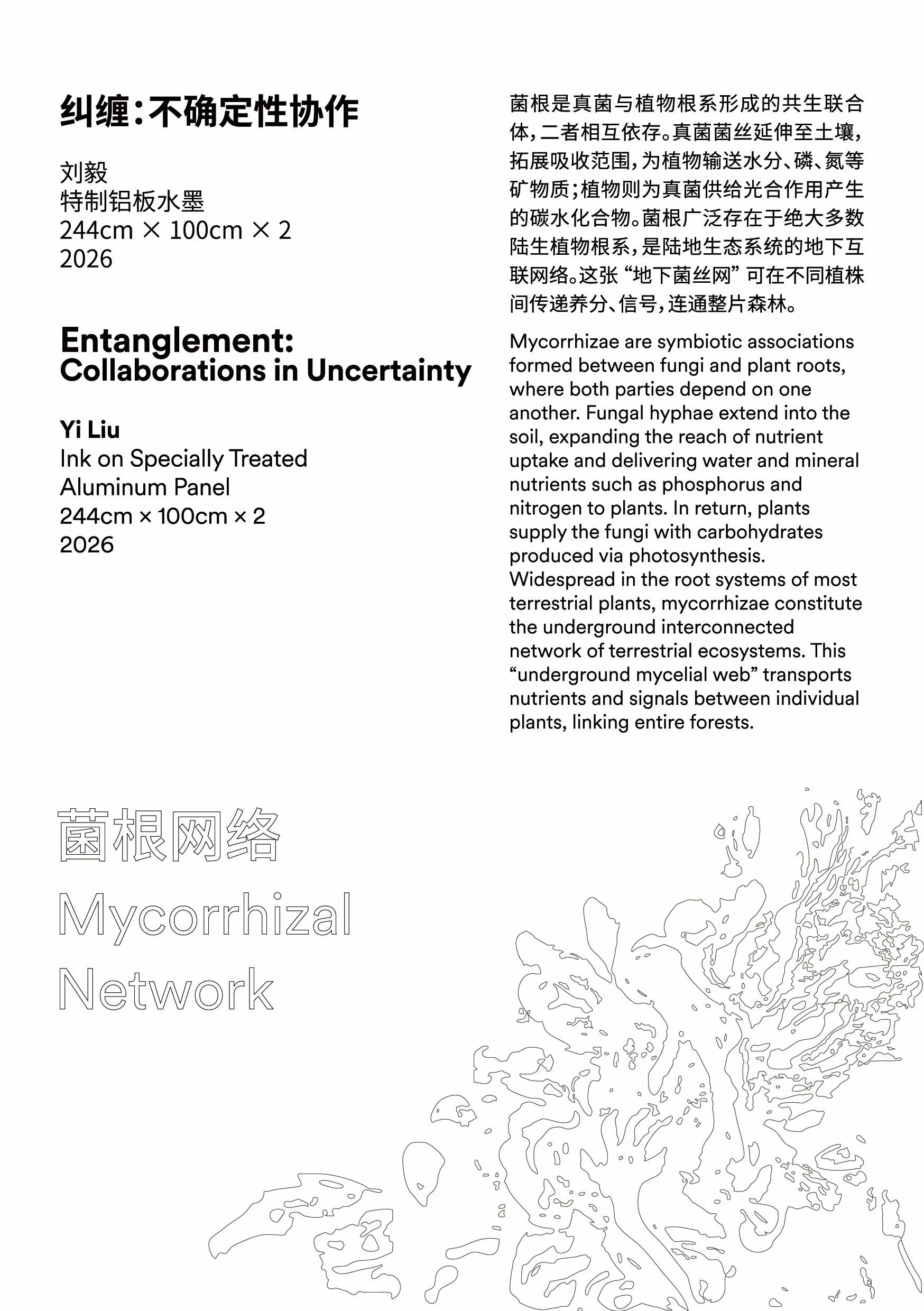
Entanglement: Collaborations in Uncertainty|纠缠:不确定性协作
Inspired by matsutake fungi and the vast underground mycorrhizal networks, the work contemplates those non‑hegemonic modes of survival beneath the earth’s surface. It visualizes a sprawling micro‑topological landscape woven from the chance interweaving of life trajectories across different species. Within the dark subterranean realm, diverse life‑forms seek allies as wandering ink‑veins, navigating between endless ruptures and continuities.
作品从松茸与庞大的地下菌根网络受到启示,思考了地表之下那些非霸权的生存模式。它将一幅宏大的微观拓扑图景进行了视觉化,这张网络由不同物种的生命轨迹交织而成。在幽暗的地下空间中,各类生命如同游走的墨色脉络,寻找着盟友,并在无尽的断裂与延续之间穿行。
Liu Yi currently lives and works in Hangzhou. Working primarily with ink animation, video and installation, she explores the contemporary transformation of ink medium and the subtle interactions between individual perception and the surrounding environment.
刘毅,现工作和生活于杭州。主要从事水墨动画、影像与装置创作,探索水墨媒介的当代转化,以及个体感知与周遭环境之间微妙的互动关系。
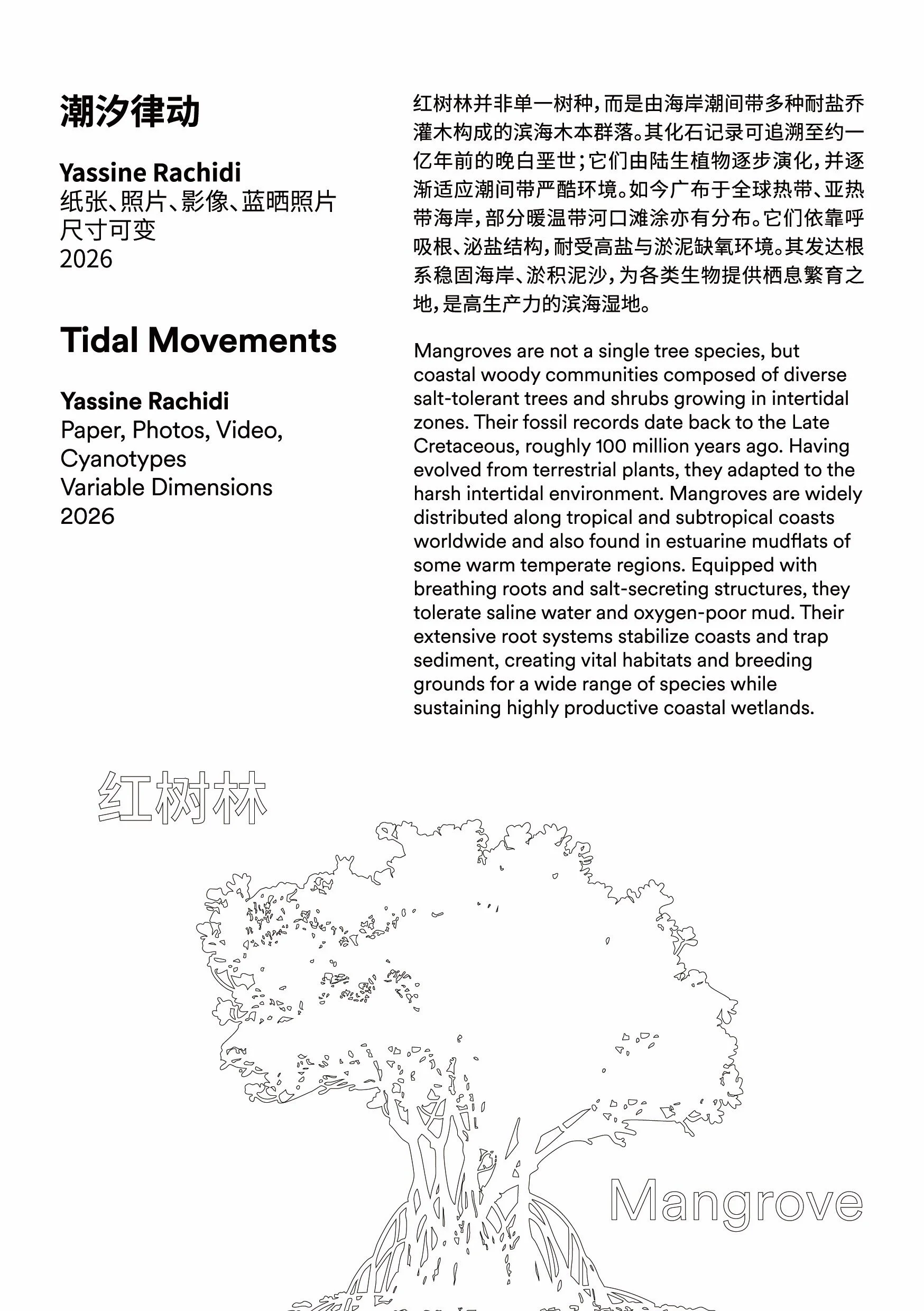
Tidal Movements|潮汐律动
This work consists of three independent text‑based pieces responding respectively to three critical tidal phases that shape mangrove habitats. Centred on mangrove ecology, these texts contemplate pressing global contemporary challenges through the observational lens of botany. The work explores deep entanglements between water, woody mangrove vegetation and human coastal settlements.
作品由三件独立的文本作品构成,分别对应塑造红树林生境的三个关键潮汐阶段。文本围绕红树林生态展开思考,借由植物学的观察视角审视当代世界亟待回应的诸多困境。作品探寻水域、红树林植被与人类海岸聚落之间深层的纠缠关系。
Yassine Rachidi currently lives and works in Basel. He is a multidisciplinary artist and PhD candidate in Urban Studies at the University of Basel. Balancing academic research and artistic practice, he uses writing, photography and filmmaking to investigate emerging materialities, temporalities and spatial identities shaped by construction, speculation and adaptation across the African continent.
Yassine Rachidi,现工作和生活于巴塞尔。跨领域艺术家,巴塞尔大学城市研究博士候选人。他兼顾学术研究与艺术实践,以写作、摄影与影像,探讨非洲大陆经由建造、推演与适应所生成的新兴物质性、时间性与空间身份。
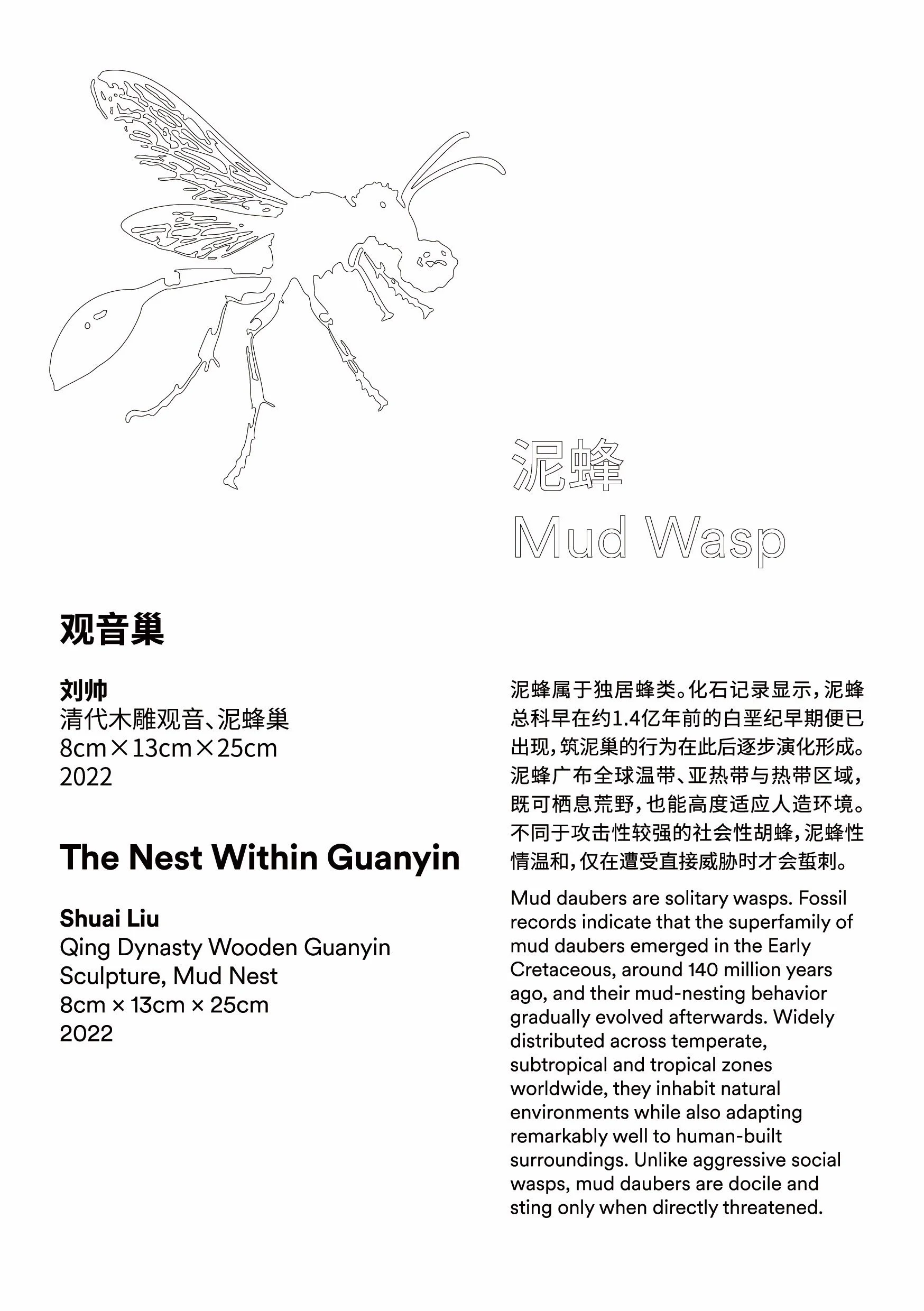
The Nest Within Guanyin|观音巢
In 2022, chance brought a mud‑dauber wasp to the hollow cavity carved on the back of a damaged wooden Guanyin sculpture dating back to the Qing dynasty. The insect constructed its own mud nest deep inside this human‑made hollow space. The wooden sculpture is nearly two hundred years old. Its rear cavity was originally designed for the traditional religious ritual practice of Zhuangzang, in which scriptures, grains and sacred objects would be placed inside during worship ceremonies. Long after this human‑centred ritual function faded and fell out of use, the empty cavity found a new purpose as a home for the wasp.
一只泥蜂偶然飞进一件清代木雕观音造像背部的空腔,并在这个人类凿出的空洞深处筑起自己的泥巢。这件木雕造像距今已有近两百年历史,背部的空腔原本用于传统宗教仪式中的“装藏”,礼拜时会向内安放经文、谷物与圣物。当这套以人类为中心的仪式功能彻底退场之后,空腔被泥蜂征用为居所。
Shuai Liu currently lives and works in Hangzhou. His practice focuses on animals displaced by human activities and their mutual interactions with ecological environments and human society. Rooted in site‑specific research, he collects traces left by animals and connects them with local culture, history and anecdotes, telling intertwined stories of humans and other‑than‑human beings.
刘帅,现工作和生活于杭州。他的创作聚焦因人类活动被迫迁徙的动物,以及它们与生态环境、人类社会之间的相互作用。他基于在地田野调研,收集动物留存的痕迹,并将其与地方文化、历史与轶事结合,讲述人类与非人类生命交织的故事。
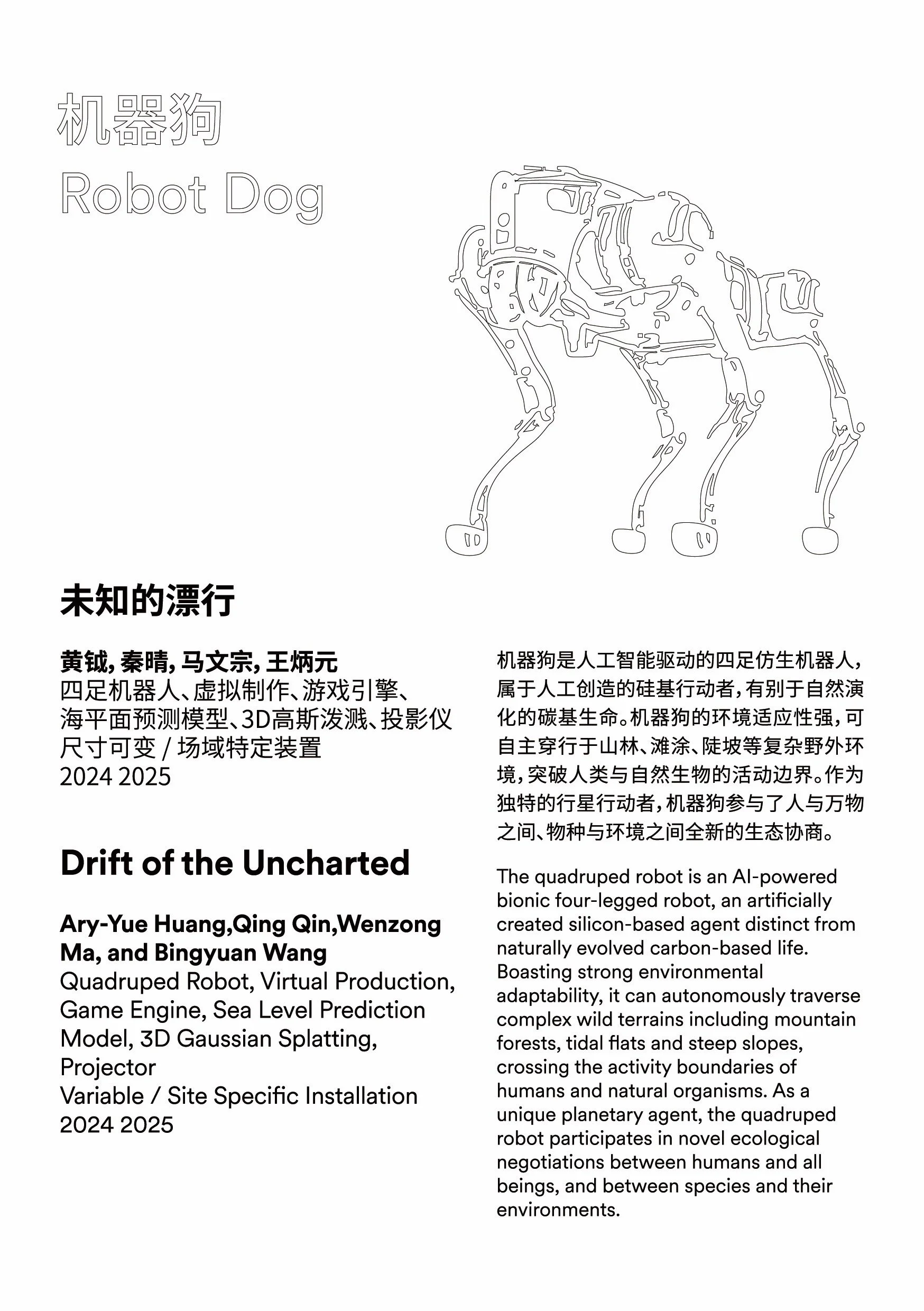
Drift of the Uncharted|未知的漂行
This is an experimental robotic performance integrating expanded‑cinema techniques, built upon climate‑change forecasting, real‑world landscape scanning and virtual digital reconstruction. Speculating over futures shaped by accelerating sea‑level rise, the work transforms familiar urban landscapes into immersive visionary scenes revealing the potential destructive impacts of climate crisis. A quadruped robot, imagined as a rescue unit from a distant future, travels across both physical exhibition space and virtual digital realms. It projects apocalyptic imagery of submerged cityscapes onto surrounding exhibition surfaces.
这是一件融合拓展影像技术的实验性机器表演作品,基于气候变化预测、真实景观扫描与虚拟数字重构而成。作品推演了海平面持续上升所塑造的未来,将我们熟悉的城市景观转化为沉浸式的幻象场景,以此揭示气候危机潜在的破坏性影响。一台四足机器人如同来自遥远未来的救援设备,穿行于实体展场与虚拟数字领域之间,并将城市被海水淹没的末世景象投射到展场之中。
Ary‑Yue Huang currently lives and works in Hangzhou. He is a media artist and researcher concentrating on agent‑based art including software agents and physical robots. His research interests cover behavioural modelling, evolution and the aesthetics of behaviour.
黄钺,[AC1] [MOU2] 现工作和生活于广州。媒体艺术家、研究者,方向为包含软件智能体与实体机器人的智能体艺术。其研究方向包含行为建模、演化与行为美学。
The Earth Speaks Back:A Letter from the Trea Diplomat | 地球回响:垂亚外交官的来信
In this work, non‑human beings are treated as present, legitimate agents rather than mere topics for human discussion. Rejecting the conventional goal of reaching negotiated consensus, the work format prioritizes subtle, genuine, irreversible contact between human participants and more‑than‑human entities.
作品将非人类生命视作在场且具备正当性的行动者,而不仅仅是供人类讨论的话题。作品摒弃了由谈判达成共识这一传统目标,更加看重人类参与者与超越人类生命之间微妙、真实且不可逆转的相遇。
Franziska Burger currently lives and works in Bern. She is a doctoral candidate in Theatre Studies jointly at the University of Bern and Stockholm University, researching open‑ended play within contemporary puppet‑ and object‑theatre. Beyond academic publications and cultural journalism, she works as a theatre practitioner, facilitator and performance dramaturg.
Franziska Burger,现工作和生活于伯尔尼。她是伯尔尼大学与斯德哥尔摩大学联合培养的戏剧研究博士候选人,研究当代木偶与物体剧场中的开放戏剧。除学术写作与文化评论之外,她也担任剧场实践者、项目引导者与表演戏剧构作。